What Type of Bone Marrow Is More Common in Babies Than in Adults
, past NCI Staff
Credit: National Cancer Institute
UPDATE: Content about a related report, published Feb 28 in Nature, has been added to this post. Encounter the blue box at the bottom of the page.
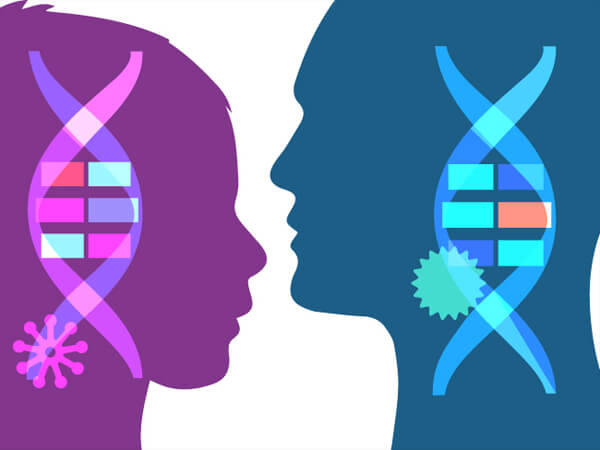
An NCI-funded study has found that, at the genetic level, acute myeloid leukemia (AML) differs greatly between younger and older patients.
"AML in younger patients and AML in older patients are entirely singled-out diseases," said the study'southward senior investigator, Soheil Meshinchi, K.D., Ph.D., of Fred Hutchinson Cancer Research Center. "Information technology's nearly like comparison chest cancer to colon cancer."
The findings, published in the January 2018 issue of Nature Medicine, come from a genomic analysis of nearly 1,000 children and immature adults with AML. The study is office of the Therapeutically Applicable Research To Generate Effective Treatments (TARGET) initiative, a collaborative effort betwixt NCI and the Children's Oncology Group (COG) to improve understand the biological science of several high-gamble or hard-to-care for pediatric cancers.
"This [study] can inform where therapeutic development should focus in guild to better target pediatric AML," said Yana Pikman, M.D., a pediatric oncologist at Dana-Farber/Boston Children's Cancer and Blood Disorders Centre, who was not involved in the report.
Therapies that are tailored to the biology of AML in children may be the best hope for treating the disease, the researchers believe. They have already used some of the early study findings to influence clinical trials of potential targeted therapies for AML.
Challenging Assumptions nearly AML
Astute myeloid leukemia, a cancer of the bone marrow and blood, occurs most oft in adults over the age of 60. Though it is rare, AML besides develops in younger adults and children, sometimes as early as a few days after nascency.
The handling options for young patients with AML include intensive chemotherapy and os marrow transplantation. In the early on 1980s, approximately xxx% of children with AML survived five years after their diagnosis, and in more recent years, the rate has increased to effectually 65%.
Despite this improvement, there has been express progress in identifying effective targeted therapies due to "an inadequate understanding of the biology of childhood AML," the TARGET investigators wrote.
"Generally, people think that AML in children is the same disease as in older adults, just less common," explained Dr. Meshinchi. "And so, until at present, most of the studies, discoveries, and treatments [for AML] have been developed in older patients. The assumption is that whatsoever nosotros find in an older population can be used to care for younger patients," he continued.
But earlier studies past Dr. Meshinchi and his colleagues showed that some of the most common genetic features of developed AML are completely absent in childhood AML, suggesting that the biological characteristics of this leukemia may differ by patient age.
Toward a Better Understanding of Childhood AML
For the TARGET project, the researchers analyzed the genomic (Deoxyribonucleic acid, RNA, and epigenetic) features of cancer cells from infants (less than 3 years sometime), children (3–xiv years one-time), and adolescents and young adults (15–39 years quondam) with AML.
In addition to identifying small DNA mutations, the investigators as well took note of large changes in chromosome construction (known as structural alterations), such as the loss, distension, or relocation of a chunk of a chromosome.
The genomic characteristics of childhood AML differed broadly among written report participants, the researchers discovered. For instance, only a handful of the same mutations and structural alterations were nowadays in more than 5% of patients in the study.
The low frequency of recurring mutations and alterations represents "a substantial challenge to advancing therapies for pediatric AML," noted Andrew Brunner, M.D., and Timothy Graubert, Yard.D., of Massachusetts General Hospital, in a commentary that accompanied the TARGET report.
Because the genetic features of each child's AML are unique, "no unmarried treatment strategy is probable to be effective for all pediatric AML [patients]," the TARGET researchers wrote.
The team also identified many fusion genes, which can grade when chromosome pieces shift and have been found to bulldoze the growth of many blood cancers. The fusion proteins produced by such fusion genes are ideal drug targets because they are exclusive to cancer cells, then drugs that target them are less probable to harm normal cells, Dr. Meshinchi explained.
"The critical question is: Is it possible to target these fusion proteins direct?" he asked. Dr. Meshinchi and his team are exploring this possibility, besides as the potential for targeting fusion proteins indirectly past going afterward the genes and proteins that they regulate.
Aforementioned Name, Dissimilar Disease
When the team compared the genomic characteristics of pediatric AML to those of adult AML, every bit identified by a study from The Cancer Genome Atlas (TCGA), they discovered significant differences.
The most critical divergence, noted Dr. Meshinchi, was: Whereas mutations were much more common than structural alterations in adults with AML, the opposite was truthful in children. For example, the researchers found nearly ten times more than structural alterations than Dna mutations in infants with AML.
The finding suggests that, in young children, structural alterations are potent enough to cause cancer on their own, he explained. In adults, AML is caused by the accumulation of multiple mutations and alterations over the course of a lifetime.
The researchers also found that the few Dna mutations that were present in pediatric AML were dissimilar from those in adult AML—both in terms of where and how oft the mutations occurred. For example, mutations in the NRAS factor (a cistron that controls jail cell growth and death) were much more common in pediatric AML than adult AML. There was some overlap in DNA mutations identified in adult and pediatric AML patients, however, particularly between the adolescent and young adults grouping and older adults.
Said Dr. Pikman, "people oft say that kids are not little adults, and I think that this [study] very clearly shows that."
Together, the study results underscore the fact that many AML treatments that are developed for adults with the hope that they tin "trickle downward" to children and young adults may not be effective for pediatric AML, Dr. Meshinchi stressed.
The written report findings provide a "better understanding of what initiates or sustains these cancers," which will assist guide the development of new treatments, said study investigator Daniela S. Gerhard, Ph.D., of NCI's Office of Cancer Genomics.
In fact, TARGET and COG researchers are already planning several clinical trials based on these findings. For example, the researchers found high levels of a poly peptide chosen mesothelin—which is sometimes expressed by lung cancer cells—in some younger patients with AML. Dr. Meshinchi and his colleagues are working with Bayer to bring a mesothelin-targeting drug the company has adult for lung cancer into clinical trials for children and young adults with relapsed AML.
Researchers at COG are also planning a clinical trial that will investigate whether comprehensive genetic tests such as those used in the TARGET written report can assist guide treatment selection and improve patient outcomes.
The adjacent pace is to continue "mining the data" from the TARGET study to identify patterns, associations, and potential drug targets, Dr. Gerhard said. And considering the data are available to qualified researchers (in ways that protect patient privacy), more researchers take the opportunity to build on these initial results.
Dr. Pikman, who leads a multi-institutional study investigating the efficiency of genomic tests for matching patients with leukemia to targeted therapy, is already using some of the data to guide her inquiry.
Differences betwixt Childhood and Adult Cancers Found in Multiple
Cancer Types
A report published February 28 in Nature by many of the same TARGET researchers has plant that several cancer types are genetically different in children and adults.
According to the study authors, the findings reinforce the belief among some researchers that drugs adult and approved to treat cancers in adults may not always be effective or appropriate for children with the same cancer types.
To perform the "pan-cancer" study, Jinghui Zhang, Ph.D., of St. Jude Children's Enquiry Infirmary, and her colleagues analyzed samples from nearly 1,700 patients, aged twenty or younger, looking at all noninherited, or somatic, genetic alterations. Patients in the TARGET report had common childhood cancers, including acute lymphoblastic leukemia, acute myeloid leukemia, neuroblastoma, Wilms tumor, and osteosarcoma.
The researchers identified 142 altered genes that bulldoze the development of these cancers (driver mutations), of which only 45% are constitute in adult cancers. Most of the genetic alterations (62%) fell into two categories: copy number variants and structural alterations.
The findings "provide a comprehensive genomic architecture for [pediatric] cancers and emphasize the demand for [pediatric] cancer-specific development of precision therapies," the researchers wrote.
This written report, and a similar one published in the aforementioned issue of Nature, provide "a remarkably complete picture of childhood cancer," NIH Managing director Francis Collins, M.D., Ph.D., wrote in a contempo web log post.
Source: https://www.cancer.gov/news-events/cancer-currents-blog/2018/genetic-differences-childhood-adult-aml
0 Response to "What Type of Bone Marrow Is More Common in Babies Than in Adults"
Post a Comment